
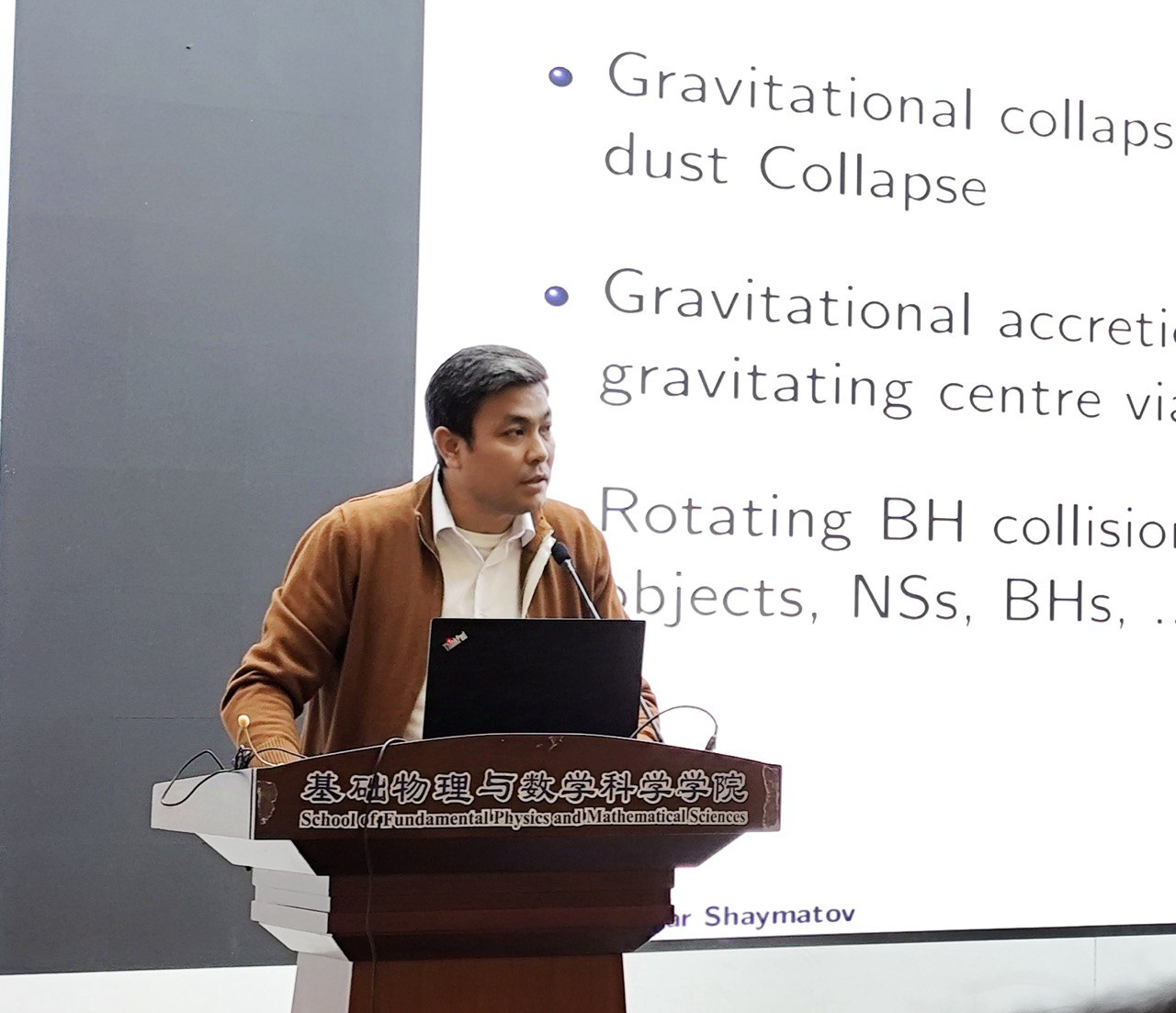
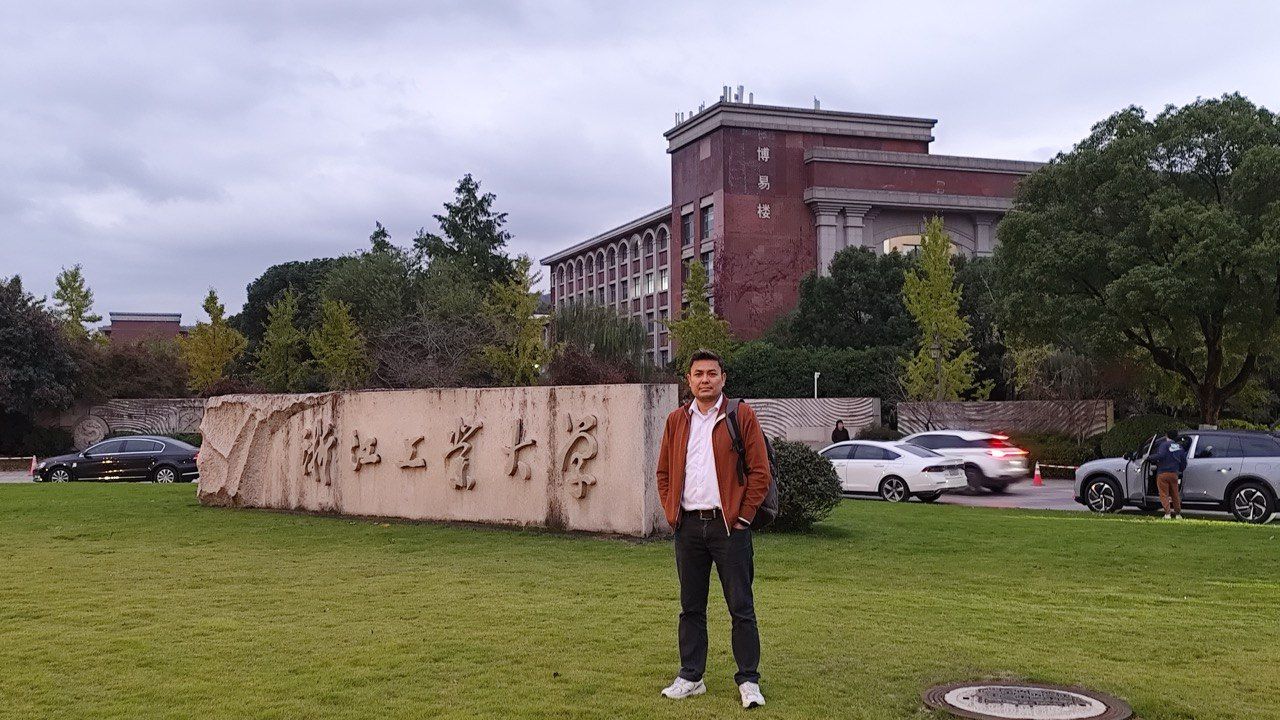
Our institute's chief researcher S. Shaymatov has become the winner of the China National Foundation competition.
The geometry of astrophysical compact objects may exhibit departures from
the
rotating black hole (BH) and thus finding such possibilities is really important task to
investigate through the observational properties of BH mimickers. However, the current
precision of measurements, despite a great success that allowed one to rule out many
hypothetical objects, still leaves an open window for a variety of BH alternatives. This
makes it challenging to find the proper techniques and observational methods for
distinguishing these alternatives from BH. Therefore, it is important first to identify the
unique signatures of BH alternatives from both theoretical and observational perspectives.
The other most exciting aspect is the BH energetics. Astrophysical BHs come into play a key
role in these extremely powerful astrophysical phenomena such as ultra-high energy cosmic
ray. For that, a new thought explanation or alternative models for the source of energy for
powering high energy astrophysical objects need to be proposed independently by considering
rotating BH mimickers which can have different magnetic field (MF)topologies. We develop a
model to understand this phenomenon more closely using a new approach. Observational
quantities of BH mimickers are analyzed through analytical and numerical methods so as to
open new opportunities for distinguishing the BH from its alternatives. In the end, our
model will be compared with the latest findings of modern observational data of
microquasars, S2 star near the Sgr A* and imaging supermassive BHs by the Event Horizon
Telescope (EHT).